

OHUB @ohub
🚨 OHUBNext | The Jobs Report America Never Got — And Why It Matters
🚨 OHUBNext | The Jobs Report America Never Got — And Why It Matters
📍 The October jobs report will likely never be released — and that silence says more than the numbers ever could.
⸻
Hey Builders!
It’s Workforce Wednesday — your weekly download on labor, education, and mobility.
For the first time in modern history, the Bureau of Labor Statistics has confirmed that the October jobs report will likely never be released due to the record-breaking government shutdown (Politico, Reuters, PBS).
Behind that silence lies more than bureaucracy. It signals a deeper fragility in the systems we trust to measure our economy — the ones that tell us who is working, earning, and building.
When the data stops, faith fills the gap — and that’s when systems begin their quiet descent into inevitable failure.
⸻
🗞️ Top Story — When the Economy Loses Its Mirror
The October blackout is more than a gap in reporting. It’s a reminder that the infrastructure of knowledge — the data we rely on to calibrate wages, rates, and risk — is itself vulnerable to political disruption.
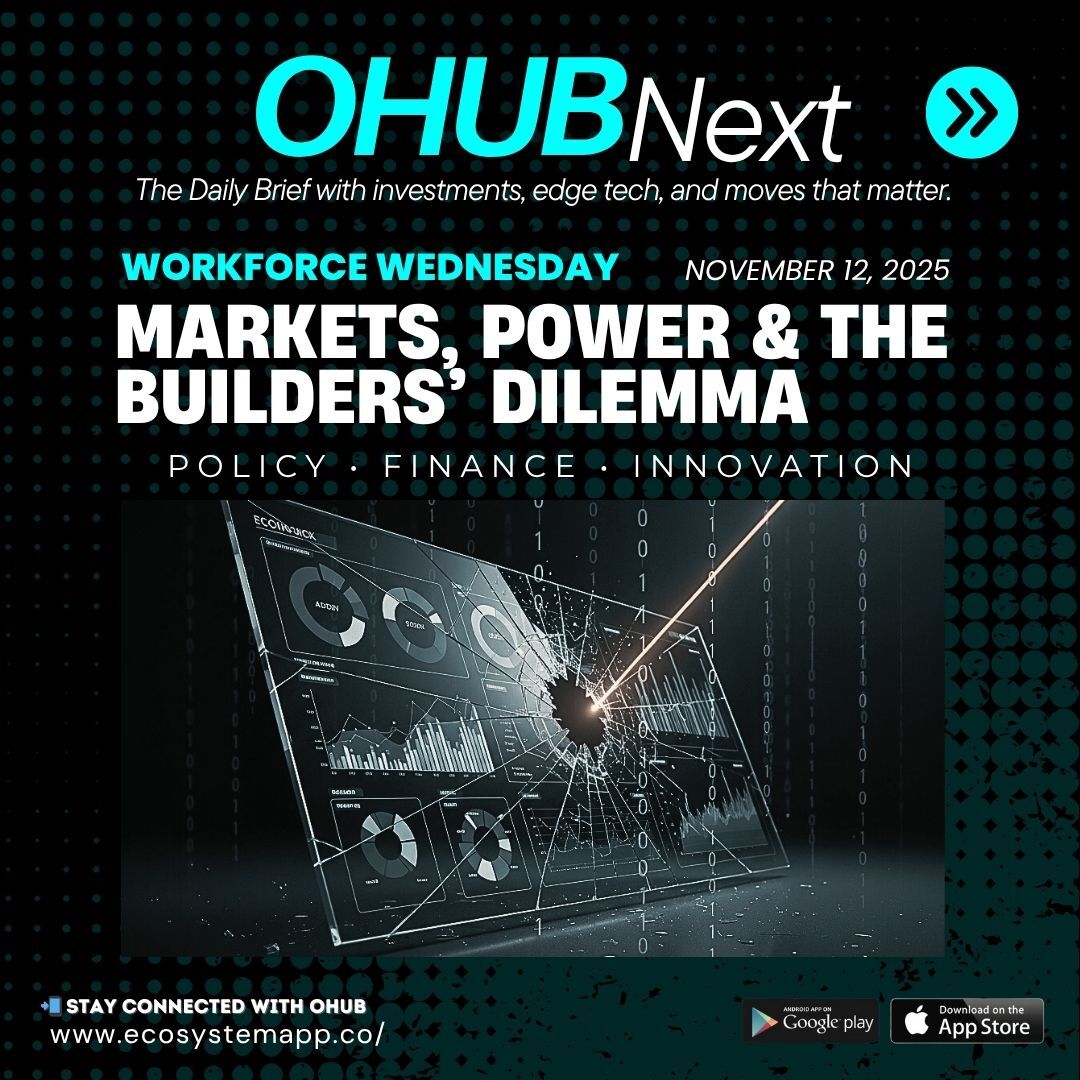
For decades, the monthly jobs report has been America’s mirror, reflecting the health of labor markets, productivity, and social progress. This month, that mirror cracked.
Without it, markets, policymakers, and employers are operating in partial darkness. Federal Reserve officials preparing for a December meeting now face a decision without one of their most critical data inputs. Wall Street analysts warn that even a temporary absence of official data could distort forecasts and delay hiring or investment decisions (Wharton, SIEPR).
The economy hasn’t stopped moving — it’s simply lost its reflection points.
Which leads to the question that matters most: when data disappears, who disappears with it — and whose progress becomes unmeasurable.
⸻
⚡ Quick Briefs
▪️ The Bureau of Labor Statistics was unable to collect October employment and price data due to the 40-day shutdown, effectively halting the country’s longest-running economic time series (Politico).
▪️ Economists warn that attempts to retroactively fill the gap could produce “recall error,” compromising the reliability of future historical comparisons (Reuters).
▪️ The absence of labor data leaves the Federal Reserve “flying blind” heading into its December meeting, complicating interest rate strategy amid mixed inflation signals (Brookings, Wharton).
▪️ Private-sector proxies like ADP’s payroll data and LinkedIn’s hiring index show declines in logistics, manufacturing, and retail, but lack the statistical weight and consistency of federal datasets (CNBC, SIEPR).
▪️ The blackout also disrupts local workforce boards, education programs, and state-level training grants that depend on BLS metrics for funding allocations (DOE, Urban Institute).
This is not merely a technical issue. It’s an existential one — proof that even data has a supply chain.
⸻
🧱 Builder Insights
1️⃣ Data is the infrastructure of trust. Without it, confidence in markets, policy, and institutions erodes faster than capital itself.
2️⃣ Leadership now demands pattern recognition. When the official record goes dark, resilience depends on those who can read weak signals and local trends.
3️⃣ Build redundancy into intelligence systems. Just as supply chains need backups, so too do data ecosystems. Cities and companies must own their own evidence.
4️⃣ Transparency is strategy. In times of opacity, organizations that communicate with clarity gain an enduring advantage.
5️⃣ Equity requires visibility. When data disappears, the most vulnerable workers — gig, hourly, and informal laborers — vanish first from the national narrative.
⸻
💬 Quote of the Day
“When we cannot measure what matters, what matters becomes invisible.” — Adapted from Lord Kelvin, 1883
⸻
🎬 Closing Thought
The missing October jobs report is more than a bureaucratic casualty. It’s a parable about modern governance and the fragility of our information economy.
An economy this complex should not be able to lose sight of itself so easily.
If data is how a nation sees itself, what happens when it blinks?
⸻
⚡ OHUBNext Daily Brief — investments, edge tech, and moves that matter.
For 12 + years, OHUB has been building pathways to multi-generational wealth — without reliance on pre-existing wealth. Through exposure, skills, entrepreneurship, capital markets, and inclusive ecosystems, we’ve helped people create new jobs, new companies, and new wealth.