

OHUB @ohub
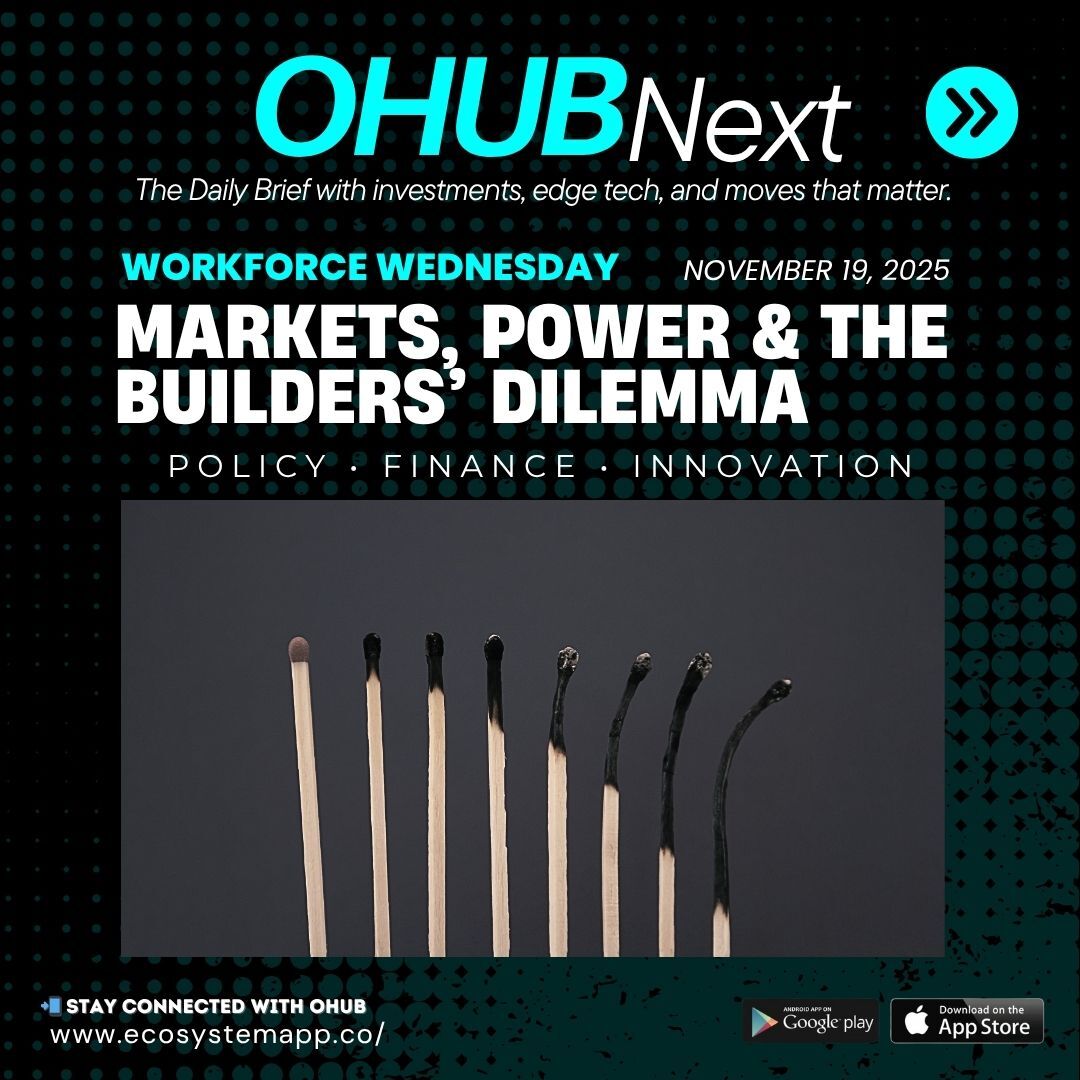
🚨 OHUBNext | The Burnout Economy: Why American Workers Are Hitting Their Limits
🚨 OHUBNext | The Burnout Economy: Why American Workers Are Hitting Their Limits
📍 Burnout isn’t a buzzword anymore. It’s a labor-market indicator, a productivity drag, and one of the most predictable workforce crises of 2025.
⸻
Hey Builders!
It’s Workforce Wednesday, and today we’re zooming in on the trend quietly shaping hiring, performance, and retention far more than any job report ever could: burnout.
The American workforce is running fatigued — psychologically, emotionally, and physiologically — and the data confirms the cracks:
▪️ Over 52 percent of U.S. workers report frequent burnout, the highest rate in modern BLS-adjacent surveys (APA; Gallup 2025).
▪️ Stress-related absences have risen nearly 40 percent since 2020 (CDC Behavioral Health Study 2025).
▪️ Among workers under 35, burnout is now the number one reason for job transitions, outpacing compensation (LinkedIn Workforce Insights 2025).
Burnout isn’t happening in a vacuum. It’s happening in an economy where uncertainty is chronic, information overload is constant, and workers are carrying multiple identities — employee, caregiver, learner, stabilizer — often at once.
This isn’t an individual failure.
It’s a systems signal — a flashing dashboard light telling us something beneath the hood needs attention before the engine overheats.
Let’s dive in…
⸻
🗞 Top Story — Burnout Is Becoming a Workforce KPI
Burnout trends are no longer just HR concerns; they’re economic markers affecting output, turnover, and national productivity.
Here’s what research from Wharton, Stanford’s Behavioral Lab, and the American Psychological Association shows is shaping the 2025 spike:
▪️ Decision fatigue has surged across industries as workers navigate unclear policies, missing federal economic signals, and shifting employer expectations.
▪️ Nervous-system overload — chronic fight-or-flight activation — is reducing cognitive accuracy by up to 20 percent in high-stress environments (APA).
▪️ Burnout disproportionately affects Black, Brown, and low-income workers due to unequal workloads, emotional labor demands, and limited access to rest infrastructure (Urban Institute 2025).
▪️ Organizations with high burnout report 2.6x higher turnover and lower year-end productivity (Gallup Workplace Trends 2025).
▪️ Front-line sectors — education, health care, logistics — show the sharpest increases in emotional exhaustion and disengagement.
In short: burnout is reshaping the labor market just as much as wage growth, automation, or remote work.
And employers who ignore it will feel it directly in quitting behaviors, performance plateaus, and engagement collapse.
⸻
⚡ Quick Briefs
▪️ U.S. stress levels are at a ten-year high, with 77 percent of workers experiencing physiological signs of chronic strain (APA Stress in America Report 2025).
▪️ Only 28 percent of employers provide structured recovery time or mental-health PTO (SHRM 2025).
▪️ Stanford researchers found that burnout costs U.S. companies up to $322 billion annually in lost productivity and turnover.
▪️ Younger workers report higher burnout, but older workers report slower recovery intervals — widening the generational stress gap.
▪️ Behavioral scientists warn that burnout is now spreading laterally through teams, not just individually — a phenomenon called “stress contagion.”
⸻
🧱 Builder Insights — Solving the Burnout Problem Before It Solves You
1️⃣ Measure burnout like you measure performance. You can’t fix what you don’t track.
2️⃣ Build recovery into workflow, not just policy. Rest only works when people don’t have to earn it.
3️⃣ Reduce cognitive overload. Fewer meetings, clearer priorities, cleaner communication.
4️⃣ Equip managers with nervous-system literacy. Leadership today requires understanding stress physiology as much as strategy.
5️⃣ Normalize human pace. No one performs well inside a system built for collapse.
⸻
💬 Quote of the Day
“Chronic stress is not a character flaw. It’s a physiological condition and workplaces must treat it that way.”
— Dr. Christine Runyan, Clinical Psychologist & Stress Researcher
⸻
🎬 Closing Thought — Three Signs You’re Burning Out (and How to Pull Back)
Burnout doesn’t arrive dramatically. It whispers. If you’re paying attention, here are the signals:
1️⃣ Your focus keeps slipping.
You reread simple things. Tasks feel heavier than they should.
💡The Fix: Reduce cognitive load. Pick one next action.
2️⃣ You’re tired even after rest.
Sleep isn’t restoring you. Your body feels “on” all the time.
💡The Fix: Downshift your nervous system — long exhale, slow walk, or one hour screen-free.
3️⃣ Everything feels urgent.
Emails, texts, small tasks all trigger pressure.
💡The Fix: “Is this action, attention, or anxiety?” Naming it breaks the spiral.
Burnout isn’t personal failure — it’s a systems warning.
Today’s invitation is simple....
Listen to your body early, reset even quicker, and most importantly, protect the part of you that does the real work.
Happy Wednesday!
⸻
⚡ OHUBNext Daily Brief — investments, edge tech, and moves that matter.
For 12+ years, OHUB has built pathways to multigenerational wealth through exposure, skills, entrepreneurship, capital markets, and inclusive ecosystems.