

Kieran Blanks, MBA @kieran_blanks
Access, Acceleration, and the AI Phase Transition
Access, Acceleration, and the AI Phase Transition
TL;DR
AI is pushing the economy through a phase transition, not a gradual shift. In complex systems, small differences in access and timing compound into long-term inequality through reinforcing feedback loops. The risk isn’t AI itself—it’s allowing early access to harden into permanent advantage before institutions adapt. This moment is decisive, time-bound, and fundamentally about whether opportunity remains inclusive or becomes structurally locked in.
⸻
📖Access, Acceleration, and the AI Phase Transition
Public discourse around artificial intelligence has largely centered on adoption rates, productivity gains, and labor-market disruption. Far less attention has been paid to the deeper structural dynamics through which technological acceleration reshapes societies. Yet it is within these dynamics—well described by complex systems science—that the most consequential implications of AI now reside.
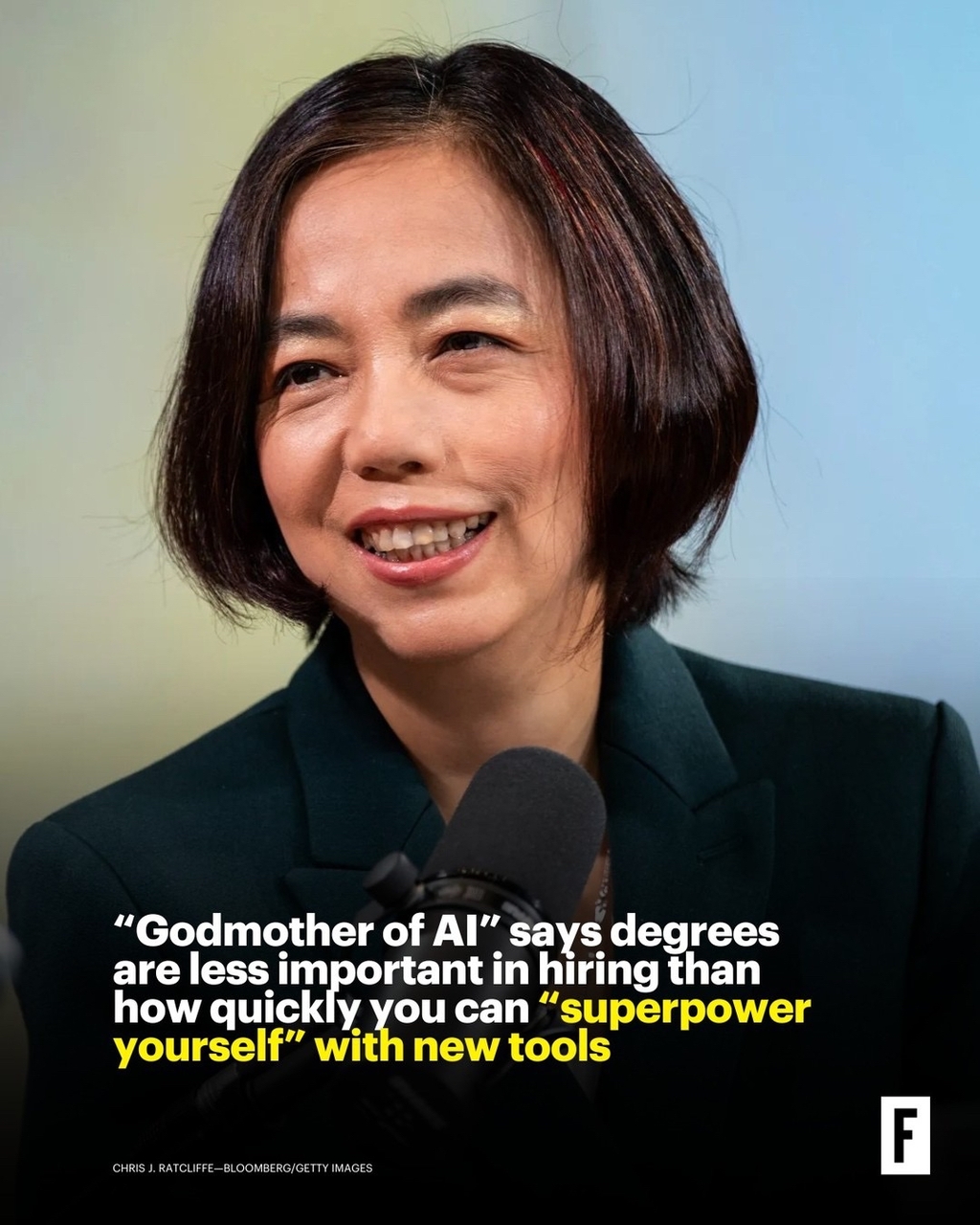
When leaders in artificial intelligence suggest that formal credentials are becoming less important than the ability to rapidly augment one’s capabilities through new tools, this observation should not be read merely as a shift in hiring norms. Rather, it signals a systemic transition characteristic of complex adaptive systems under conditions of rapid acceleration. In such systems, change is nonlinear: small differences in access, timing, and positioning can yield disproportionate and enduring outcomes.
Complex systems tend to operate in relative equilibrium until disrupted by general-purpose technologies that push them beyond critical thresholds. At these inflection points—often described as phase transitions—the rules governing value creation, coordination, and power are temporarily destabilized. Legacy indicators of competence weaken, new forms of capability rise in prominence, and institutions designed for slower cycles of change struggle to respond.
Artificial intelligence represents such a threshold event. As a general-purpose technology, it does not merely enhance isolated tasks but alters the underlying architecture of learning, production, and decision-making across the economy. The consequence is not only faster innovation, but the compression of adaptation timelines themselves. Skills that once took years to acquire must now be developed in months, while the costs of delayed engagement increase exponentially.
Within this environment, inequality emerges less as a function of individual merit than as the outcome of reinforcing feedback loops. Early access enables faster learning; faster learning produces advantage; advantage attracts capital and opportunity; and those inflows further accelerate capability accumulation. Conversely, exclusion from early pathways generates structural barriers that harden over time—a phenomenon well documented in complexity science as path dependence.
History offers ample precedent. The Industrial Revolution, the computer age, and the rise of digital networks each produced widening inequality before institutions adapted to distribute benefits more broadly. In each case, outcomes were shaped not by the technology itself, but by the speed and inclusiveness of institutional response.
What distinguishes the present moment is velocity. Artificial intelligence collapses decades of diffusion into a narrow temporal window, reducing the margin for corrective intervention once disparities begin to crystallize. In complex systems, such windows are decisive: once a system settles into a new configuration, reversing entrenched inequalities becomes exponentially more difficult.
The dystopian risk, therefore, is not one of machines displacing human agency wholesale, but of a bifurcated society in which opportunity is increasingly determined by early positioning rather than latent potential. A world in which some succeed not because they are more capable, but because they were situated within the system at the moment when access still translated into mobility.
This outcome is not inevitable, but it is time-bound. The central question confronting policymakers, educators, and institutional leaders is not whether artificial intelligence will generate value—because it will—but whether pathways into capability can be scaled inclusively before reinforcing feedback loops harden into permanent stratification.
In complex systems, moments of transition are rare, brief, and consequential. We are not observing the future as it emerges; we are actively determining who will be able to participate in it.
Long story short, If access to AI-enabled capability remains uneven during this transition, inequality will not be a side effect—it will be the system’s defining feature. And, that my friends is a problem worth getting in front of.
……